In October 2016, scientists in Jerusalem lifted the marble cover off the place where Christians believe Jesus was buried. It had not been opened for centuries. What they found, and what the lab tests later showed, gave a surprising answer to a very old question.
The Most Important Tomb in Christianity
The Church of the Holy Sepulchre stands in the Old City of Jerusalem. For most Christians around the world, it marks the place where Jesus was crucified, buried and rose again.
Inside the church is a small shrine called the Edicule. It surrounds a rock shelf, or “burial bed,” where tradition says his body was laid. Millions of pilgrims queue to step inside it every year.
Because so many beliefs meet in this one small space, the tomb has been fought over, rebuilt and protected for nearly 2,000 years. That long history is also why scientists were so keen to look inside when the chance finally came in 2016.
A New Tomb in a Garden
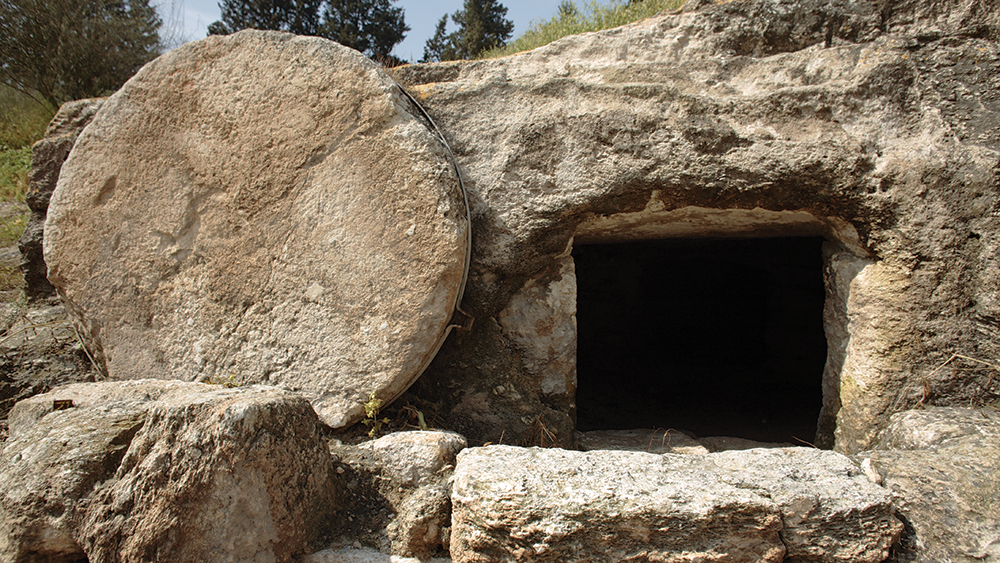
The Gospels say Jesus was buried in a new tomb cut into rock. It was in a garden, close to the place where he was crucified, and outside the city walls.
Wealthy Jewish families in that time often used tombs like this. A body was placed on a stone shelf inside a small cave, and a large stone closed the entrance.
The Gospels also say the tomb belonged to a rich follower named Joseph of Arimathea. This detail matters to archaeologists, because it tells them what to look for: a family tomb cut into the rock, not far from the city.
A Roman Temple on Top
About 100 years after Jesus died, the Roman Emperor Hadrian rebuilt Jerusalem as a Roman city. He built a temple over the area, probably to the goddess Venus.
An early church writer, Eusebius, later claimed Hadrian did this to bury the tomb and stop Christians from worshipping there. Whatever the reason, the temple stood on the site for about 200 years.
Strangely, this may have helped later on. By building over the spot, the Romans may have marked it, so local Christians could still remember where the tomb lay many years later.
Constantine Goes Looking
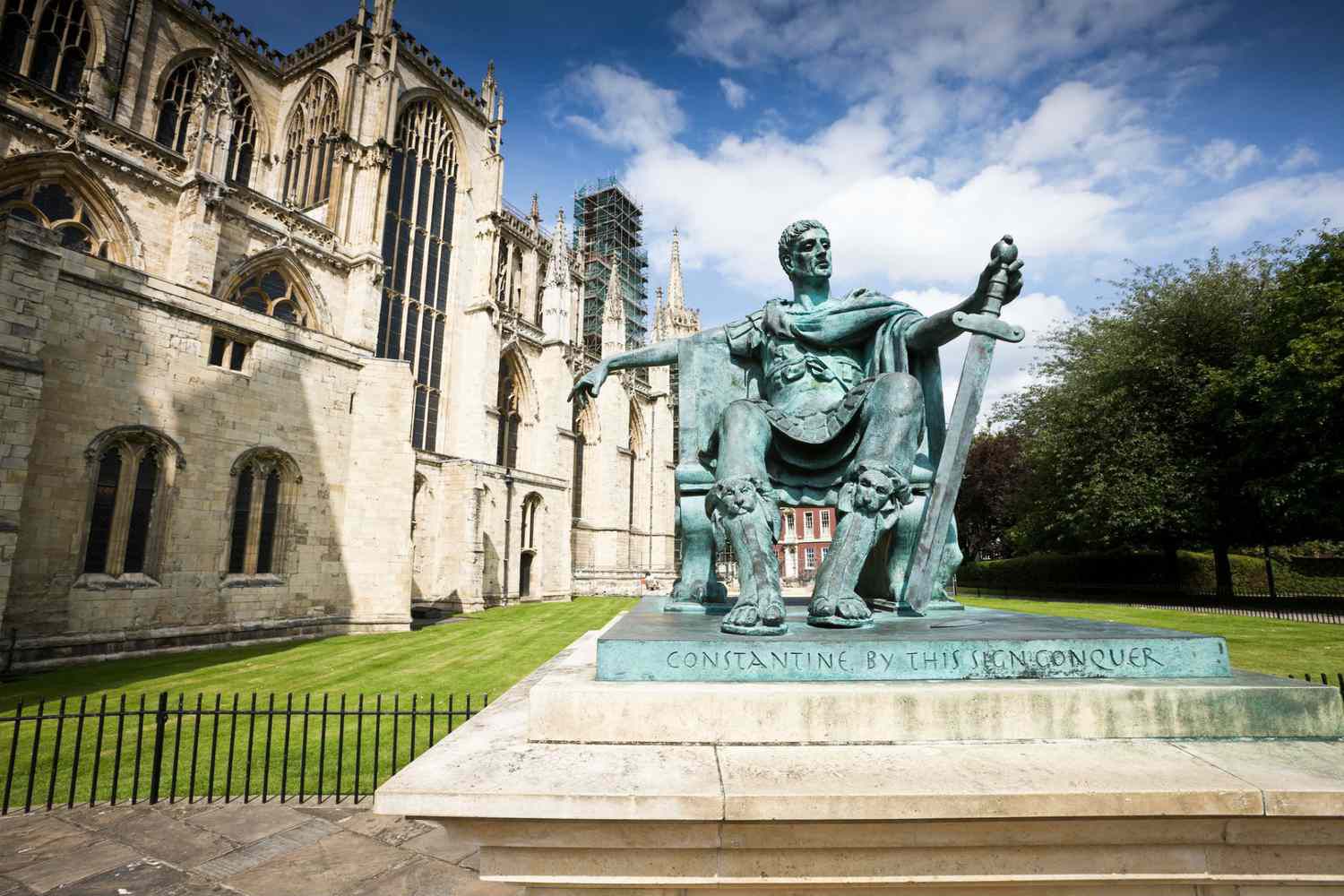
In around AD 325, Constantine, the first Christian emperor of Rome, ordered the search for Jesus’ tomb. His mother, Helena, travelled to the Holy Land at about the same time.
Local Christians pointed to Hadrian’s temple. Constantine’s workers pulled it down and dug away the earth below. Under it, according to the records, they found a tomb cut into the rock.
Eusebius, who wrote about these events at the time, described the tomb’s discovery as a great surprise to everyone. For Christians, finding it felt like a sign that their faith could finally be practised in the open.
The First Church
Constantine’s builders cut away the hillside around the tomb, leaving it standing alone as a block of rock. They put a small shrine around it and built a huge church over the whole site.
The church was finished in about AD 335. From then on, the tomb became one of the most visited places in the Christian world.
Pilgrims came from across the Roman world to see it. Some wrote about their trips, and their notes help historians understand what the tomb and church looked like in those early centuries.
Destroyed in 1009
In 1009, the Fatimid ruler al-Hakim ordered the church to be destroyed. His men knocked down the building and hacked away much of the rock tomb itself.
The church was rebuilt, on a smaller scale, by around 1048. A new shrine was put up over what was left of the burial place.
This attack is one of the reasons so little of the first tomb is visible today. It also explains why experts were never sure how much of the original rock was left under all the later stone and marble.
The Crusaders Arrive
The Crusaders captured Jerusalem in 1099. Over the next 50 years, they rebuilt the church and joined its holy spots together under one roof.
Much of the church that visitors walk through today still follows the Crusaders’ design. Some experts first thought the hidden slab found in 2016 might date from their time.
Their rebuilding turned the church into one large building, rather than several separate spaces. Many of the arches, columns and chapels from their time are still in use.
Sealed Under Marble
By 1555, the shrine needed work again. Franciscan friars rebuilt it and covered the rock burial bed with marble.
The marble protected the rock from pilgrims, who had long chipped off small pieces to take home. From then on, nobody could see or touch the original stone.
For more than 450 years after that, people prayed over the slab without knowing exactly what was underneath. Over time, some experts wondered whether any of the original burial bed had survived at all.
The Fire of 1808
In 1808, a fire badly damaged the church. The shrine around the tomb was rebuilt in 1810 in an Ottoman Baroque style.
That 1810 shrine is the one pilgrims still see today. It was built over the older layers, a bit like boxes inside boxes.
Because each new shrine was built on top of the last, nobody knew for certain how much older material was hidden inside. Only a full restoration could give experts a proper look.
Three Churches, One Building
No single church owns the Holy Sepulchre. The Greek Orthodox, the Roman Catholics (through the Franciscans) and the Armenian Apostolic Church share control of it. Smaller groups also have chapels inside.
Since the 1700s, strict rules known as the Status Quo have set who controls each corner and who can repair what. Even small jobs need all sides to agree, so big repairs were put off for a very long time.
This system keeps the peace, but it can also slow things down. Over the years, there have been arguments, and even scuffles, over things as small as moving a chair or cleaning a step.
The Ladder Nobody Moves
Above the church’s main door sits a simple wooden ladder. It appears in drawings from the 1700s and has stayed in almost the same spot ever since.
It is known as the “Immovable Ladder.” Nobody is fully sure who owns it, and moving it without everyone’s agreement could break the Status Quo. It has become a famous symbol of how hard it is to change anything in the church.
Visitors often look up and photograph it from the square outside. For many, it sums up the church perfectly: a place where even a small wooden object can carry centuries of history.
Held Up by Iron
An earthquake in 1927 badly shook the church. By 1947, the shrine around the tomb was cracking and bulging, so the British authorities, who then ruled the area, wrapped it in an iron frame.
The frame was meant to be a short-term fix. It stayed for almost 70 years and became an ugly part of the shrine’s look.
Pilgrims grew used to seeing steel beams and bolts around the holy shrine. For many people, the frame became a sad reminder that the churches could not agree on proper repairs.
Close to Collapse
By the 2010s, experts were worried. Damp was rising from below, the mortar was crumbling, and smoke from candles had covered the stone in black soot.
In 2015, Israeli authorities briefly closed the shrine over safety fears. It was clear that the problem could not wait any longer.
The shrine was carrying a heavy load on weak ground. Experts warned that if nothing was done, it could one day give way without much warning.
The Churches Agree
In 2016, the three main churches finally agreed on a full restoration of the shrine. For a site where groups had argued for centuries, this was a big moment.
They chose a team from the National Technical University of Athens to do the work. The project was overseen by a committee with members from all three churches.
The agreement showed what could happen when the different groups worked towards a shared goal. Many people hoped it would lead to better teamwork inside the church in the future.
The Team from Athens
The project was led by Professor Antonia Moropoulou, a leading expert in protecting old buildings. Her team of about 50 scientists, engineers and restorers had worked on major Greek monuments, including the Acropolis.
They brought modern tools and a careful plan. Every stone they removed would be numbered, cleaned and put back in its place.
The team also had to respect the church’s daily life. Prayers, services and processions carried on around them, so every step of the work had to be planned with care.
Who Paid for It
The work cost about $3.7 million. The three churches each gave money, and the World Monuments Fund, a charity based in the US, gave a large share thanks to a private donation.
King Abdullah II of Jordan also gave a personal gift towards the work. It was a rare example of many groups paying for one shared project.
Even with the money in place, there was no room for mistakes. The shrine is one of the most watched buildings on Earth, and the whole world would see the result.
Work Begins
The restoration started in May 2016. The team worked mostly at night and around religious services, so pilgrims could still visit during the day.
They took apart the outer stone panels of the shrine one by one. Behind them, they filled gaps in the crumbling masonry with a special grout to make the structure strong again.
It was slow, careful work. Each panel had to be cleaned of soot, strengthened where needed and put back exactly where it came from.
Looking Before Touching
Before moving anything, the team studied the shrine with modern tools. These included ground-penetrating radar, which can “see” through stone, along with detailed laser scans.
The scans gave them a clear picture of the layers inside. They could plan each step without damaging what lay beneath.
This mix of old skills and new technology became a key part of the project. It let the team protect the shrine while still learning as much as possible about it.
Lifting the Marble
On 26 October 2016, the team lifted the marble cover off the burial bed. It was the first time in centuries that anyone had looked beneath it.
The church leaders gave them just 60 hours with the tomb open. Every hour counted.
National Geographic was allowed to film the work, so the moment was recorded for the world to see. Church leaders and members of the team watched closely as the slab was moved.
Only Rubble at First
Under the top slab, the team first found a layer of loose fill and rubble. For a while, they feared that nothing of the original tomb was left.
They kept working, carefully removing the debris by hand.
It was a tense time. With the clock ticking, the team had to decide how far they could go without risking damage to whatever lay beneath.
A Hidden Slab with a Cross
Then came the surprise. Under the rubble lay a second, older marble slab. It was broken, and a small cross was carved into its surface.
Nobody knew it was there. At first, some experts thought it might come from the Crusader period, around 900 years ago.
The cross suggested the slab had been placed there by Christians who knew how holy the spot was. Its true age, however, would only be known after lab tests.
The Original Rock
Beneath the cross slab was the original limestone surface of the burial bed. It was still in one piece.
Fredrik Hiebert, an archaeologist with National Geographic who was filming the work, said he was so amazed that his knees were shaking. He had not expected the original rock to survive.
For the first time in hundreds of years, people could see the rock surface that pilgrims had prayed over. It was a deeply moving moment for many of those in the room.
The Cave Walls Still Stand
The team also confirmed that walls of the original limestone cave still stand inside the shrine. They rise about two metres high behind the marble panels.
Before finishing, the team cut a small window into the marble of the shrine. Now pilgrims can see a patch of the bare rock wall for themselves.
This was important news. It showed that much of the cave Constantine’s builders found was still there, hidden inside the newer stonework.
Sealed Again
Before the 60 hours ran out, the team took samples of the mortar between the rock and the cross slab. They also recorded everything with photos and scans.
Then they put the marble back in place. The burial bed was sealed again, and it is unlikely to be opened for a very long time.
Some people were sad that the rock would be hidden again. But covering it was the best way to protect it from damage and from pilgrims trying to touch it or take pieces away.
Unveiled to the World
On 22 March 2017, the restored shrine was revealed at a ceremony attended by church leaders and the Greek Prime Minister. The black soot was gone, and so was the iron frame from 1947.
The Greek Orthodox Patriarch called the work a gift to the whole world. Pilgrims could now see the shrine looking as it did around 200 years ago.
Long queues formed as soon as the doors opened. For many visitors, seeing the clean, bright stone for the first time was an emotional moment.
How Do You Date Mortar?
The team sent the mortar samples to a lab. They used a method called optically stimulated luminescence, or OSL.
OSL measures when tiny grains of quartz in the mortar last saw light. Once the mortar was sealed in darkness, that “clock” started ticking. The tests took about a year.
Archaeologists use this method to date materials that other methods, such as carbon dating, cannot handle well. It works especially well for building materials like mortar and sand.
The Answer: Around AD 345
In late 2017, National Geographic revealed the results. The mortar between the rock and the cross slab dated to around AD 345.
That is exactly the time of Constantine. Before this, the oldest evidence found at the tomb was only around 1,000 years old, from the Crusader era.
The result matched the old written records closely. It suggested that the people who first honoured this tomb in Constantine’s time really did choose this exact spot.
Layers of History
Other samples matched what history books already said. Mortar from the tomb’s entrance dated to the 11th century, when the shrine was rebuilt after al-Hakim destroyed it in 1009.
More mortar matched the Franciscan repairs of the 1500s. Each layer fitted a known chapter in the tomb’s long story.
This gave experts more confidence in the dating method. When several results line up with known history, it is easier to trust the oldest result too.
Does This Prove It Is Jesus’ Tomb?
Not exactly. The results show that this is the same tomb that Constantine’s people found and honoured in the 300s.
They cannot show who was buried there 300 years earlier. Science can confirm the Roman story, but whether it is truly Jesus’ tomb is still a matter of history and faith.
Even so, the findings make the site’s claim much stronger than many people expected. Very few holy places can show such a long and unbroken history.
A Rival Site: The Garden Tomb
Some Christians, mainly Protestants, visit a different site called the Garden Tomb, just north of the Old City walls. In 1883, the British general Charles Gordon claimed it was the true burial place of Jesus.
It is a peaceful place, and it feels like the garden in the Gospels. But Israeli archaeologist Gabriel Barkay dated the tomb to around 700 years before Jesus, so it could not have been the “new” tomb the Gospels describe.
Many visitors still love the Garden Tomb as a calm place to pray and reflect. Most archaeologists, however, see the Church of the Holy Sepulchre as the far stronger candidate.
Inside or Outside the Walls?
The Gospels say Jesus was buried outside the city. Yet the Church of the Holy Sepulchre stands inside the Old City today, which has puzzled many visitors.
The answer is that the city grew. In the 1960s and 1970s, digs led by Franciscan archaeologist Virgilio Corbo found an old quarry and other rock-cut tombs under the church. This showed the area was outside the walls in Jesus’ time, before a new wall was built around AD 41 to 44.
This means the church’s location does not clash with the Gospel story. The tomb would have been just outside the city in Jesus’ time, and only later ended up inside it.
A Warning for the Future
The shrine is now strong again, but the work is not fully done. Professor Moropoulou warned that the ground and foundations beneath it are still weak and damp.
She said that if they fail, it could happen suddenly. She also asked pilgrims to stop pressing lit candles against the stone walls, to protect the shrine for the future.
Her words were a reminder that old buildings need constant care. Fixing the shrine was a huge step, but it was not the end of the story.
Why It Still Matters
For archaeologists, the 2016 opening was a rare look inside one of the world’s most important buildings. It showed that the site honoured today goes back at least 1,700 years.
For millions of believers, the tomb’s meaning never depended on a lab test. Every day, pilgrims still wait in line to spend a few quiet moments inside.
In the end, the 2016 opening brought science and faith together in a rare way. It answered some old questions, raised new ones, and reminded the world why this small tomb still matters so much.
Sources
- Age of Jesus Christ’s purported tomb revealed, National Geographic
- Mortar found at “Jesus’ Tomb” dates to the Constantine era, Smithsonian Magazine
- Jesus’ tomb unveiled after year-long renovation, NBC News
- Historic restoration of Jesus’ burial shrine completed, Associated Press
- Jesus’ tomb opened: what did we learn so far?, Christian Science Monitor
- Church of the Holy Sepulchre, OrthodoxWiki
- The Garden Tomb: Was Jesus Buried Here?, Gabriel Barkay, Biblical Archaeology Review